ZWILLING Kramer Damascus Santoku Knife Review
I've been using the Kramer Euroline Damascus Santoku as my primary knife for about a year and a half now. It handles pretty much everything I throw at it: vegetables, proteins, herbs, the lot. From the moment I first picked it up, the balance and weight just felt right in the hand.
Usability & Features
This is an all-purpose daily driver that genuinely delivers. The 7-inch blade is the sweet spot for a santoku. Long enough for most tasks, maneuverable enough for detail work. The SG2 micro-carbide powder steel core, hardened to 63 HRC, gives it serious edge retention. After a year and a half of regular use, I've only sharpened it three times on whetstones, and each time it comes back razor sharp without much effort.
The weight and balance deserve a mention. At just over half a pound with the Micarta handle, it feels substantial without being tiring. It's the kind of knife where chopping becomes genuinely satisfying rather than just a means to an end.
One honest caveat: food release was noticeably poor for roughly the first year. Things stuck to the blade more than you'd expect at this price point. The good news is that it got significantly better over time, whether that's the Damascus texture smoothing out through use or just some kind of seasoning. The release now is much improved, but it's worth knowing going in.
Aesthetic & Design
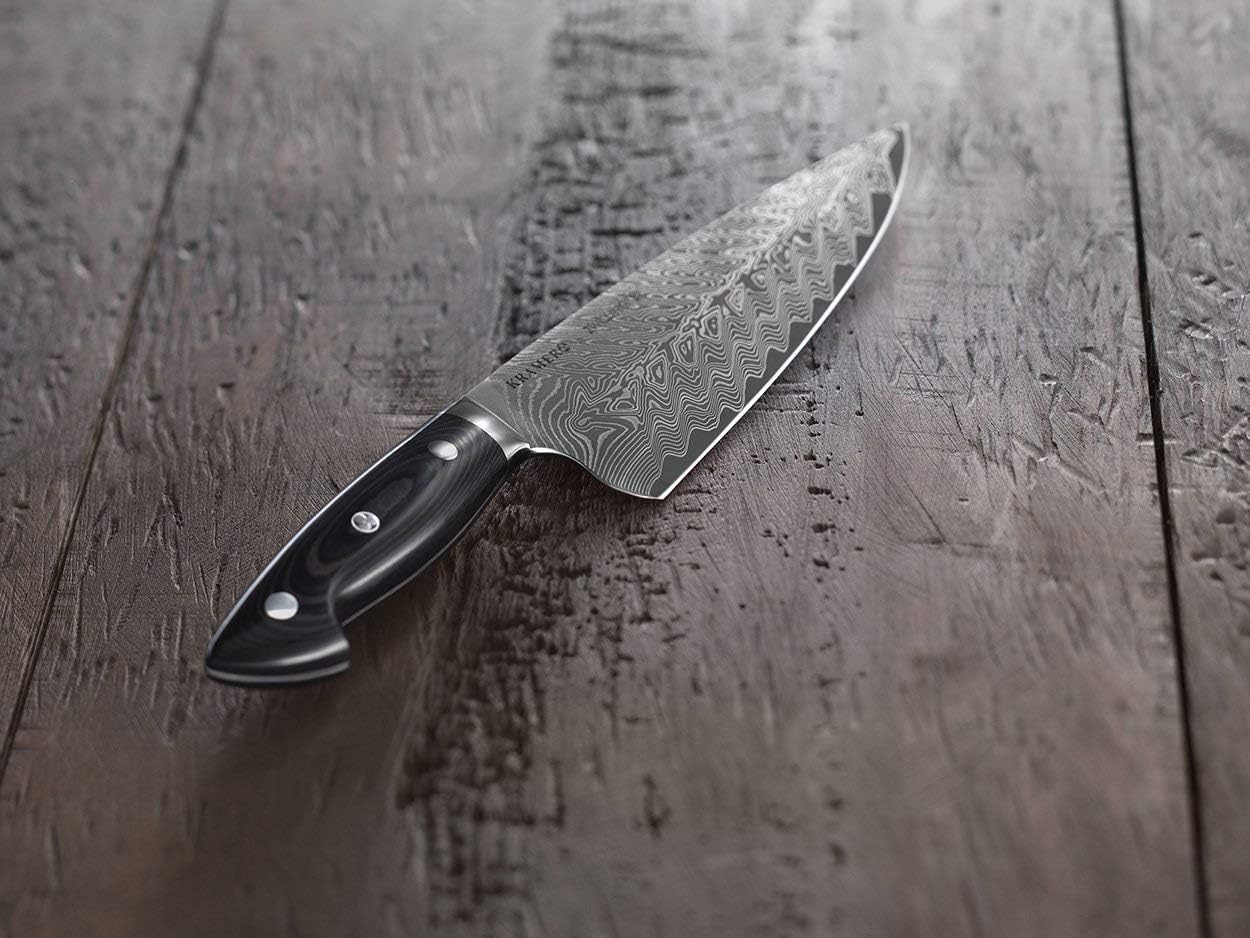
Let's be real, the 101-layer chevron Damascus pattern was part of the purchase decision. And it doesn't disappoint. The rippling steel pattern catches the light differently every time you pick it up. It's the kind of tool you want to leave on a magnetic strip rather than hide in a drawer.
The black linen Micarta handle is understated and grippy, with Bob Kramer's signature mosaic pin adding a subtle maker's mark. The exposed tang and riveted construction give it a professional, no-nonsense look. Hand-finished by artisans in Seki, Japan. You can feel the craftsmanship.
Durability & Care
SG2 steel is a workhorse. The edge retention has been genuinely impressive. Sharpening only three times in eighteen months of near-daily use speaks for itself. I use whetstones with multiple grits, and the steel responds well to them. It's not the easiest steel to sharpen compared to softer German knives, but it rewards the effort with an edge that lasts.
Standard Japanese knife care applies: hand wash, dry immediately, don't twist the blade, and keep it off the cutting board edge-first. Nothing unusual, but worth remembering this isn't a beater knife you can toss in the dishwasher.
Final Thoughts
The Kramer Damascus Santoku earns its place as an everyday reach-for tool. The SG2 steel performs, the balance is excellent, and the Damascus aesthetic is genuinely striking. The food release issue in the first year is a real drawback. At around $380, you'd expect better out of the box. But patience pays off, and the knife improves with use.
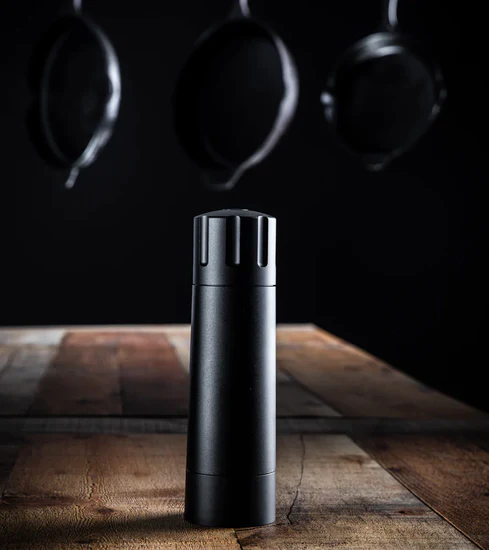
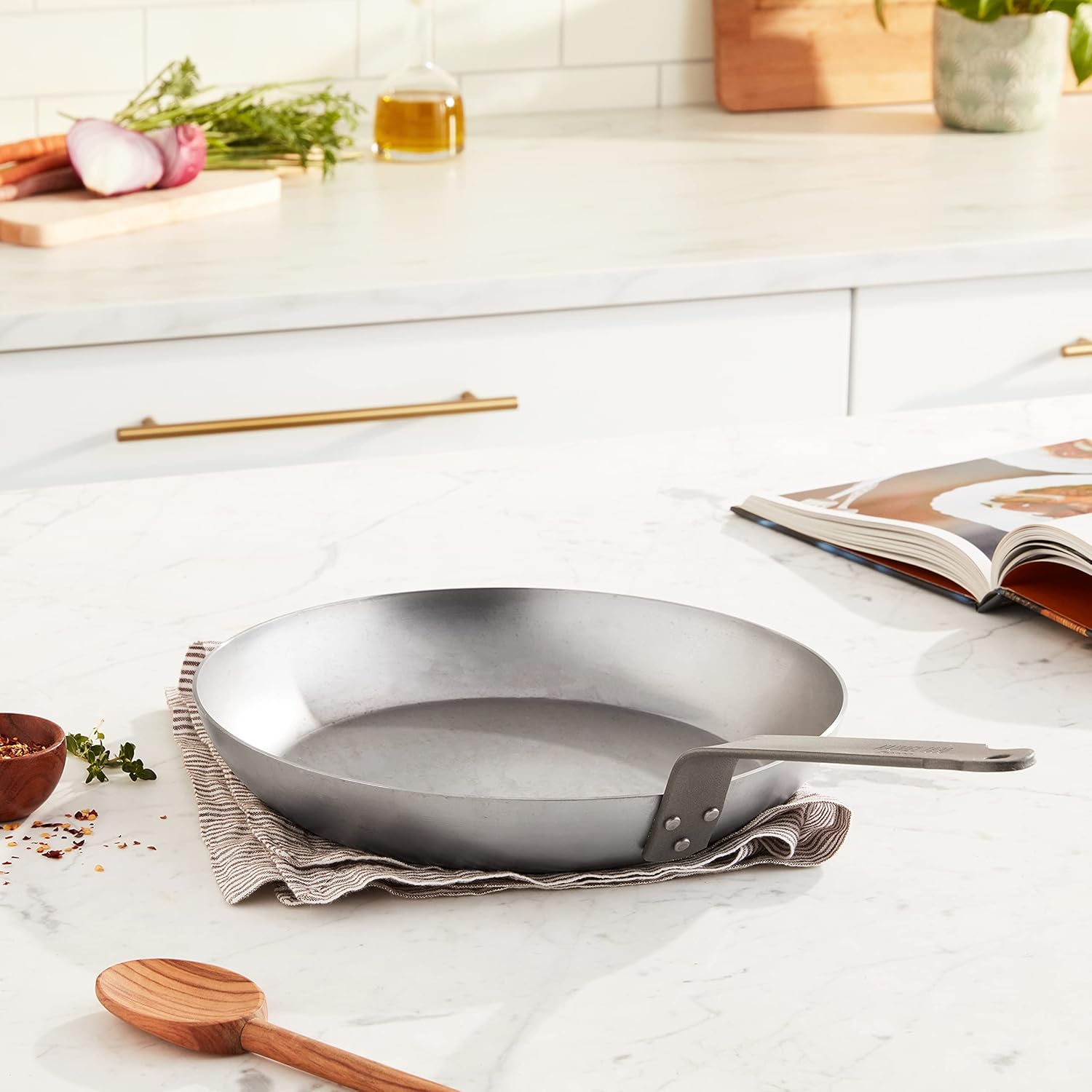
If you're looking for a single knife that covers most kitchen tasks and you want something that looks as good as it cuts, this is a strong pick. Pair it with a proper carbon steel pan and a Pepper Cannon, and your kitchen setup is looking pretty solid.